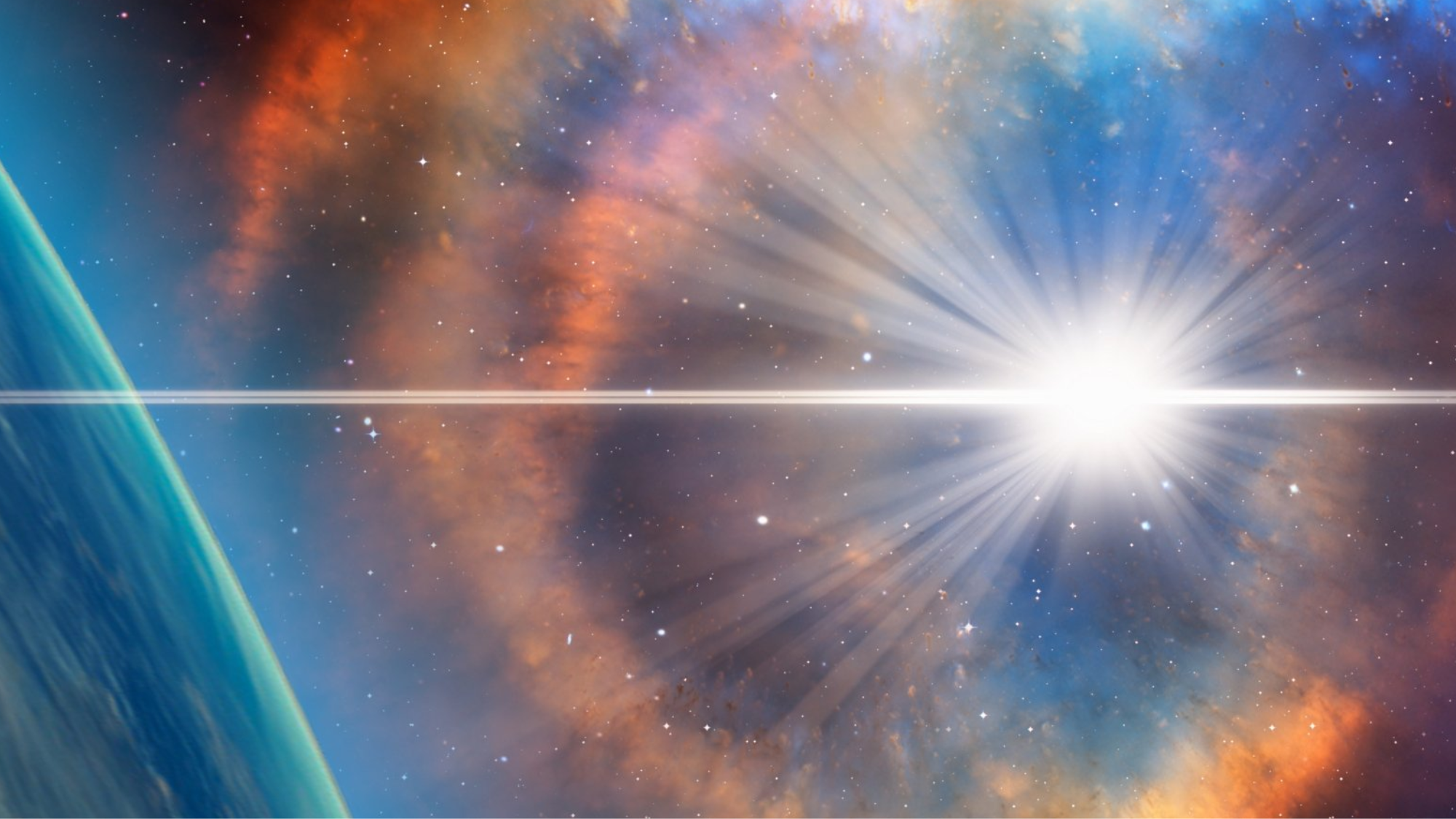
Quick Summary: The ability of ghostly particles called neutrinos to switch from one type to another may determine whether massive stars explode as supernovae or collapse into black holes. Researchers at the University of Copenhagen are investigating how this flavor change affects stellar fates and could explain discrepancies in observed supernova counts.
Ghost Particles: Why Neutrinos Matter So Much
Neutrinos, one of the universe’s most enigmatic particles, behave almost like ghosts. They interact with almost nothing and pass through matter at near-light speed. Yet despite their invisibility, they play a critical role in determining the fate of stars.
Scientists have long known that neutrinos can transform from one type to another, a phenomenon known as “flavor change.” However, new research suggests that this flavor change may actually determine which stars explode as supernovae and which collapse into black holes.
Why Neutron Star Mass Matters
Another intriguing finding of the study concerns the mass of neutron stars. Scientists predict that neutrino flavor change could produce less massive neutron stars, which might explain why astronomers observe neutron stars with lower masses than theoretical predictions.
Study co-author Tamborra notes that this could account for the discrepancy between observed neutron star masses and theoretical models. This sheds light on one of the most fundamental questions in stellar evolution: what determines a star’s final destiny?
| Parameter | Value |
|---|---|
| Energy fraction carried by neutrinos | 99% |
| Observed supernova count | Fewer than theoretical predictions |
| Neutron star mass difference | Lower than theoretical predictions |
| Outcome of stellar collapse | Neutron star or black hole |
How This Discovery Will Help Us Understand Cosmic Evolution
This research could help us understand not only the fate of stars but also the chemical evolution of the universe. Supernova explosions fill the cosmos with heavy elements that form everything from planets to people. Knowing which stars explode is crucial for understanding how these elements are distributed.
As we saw in the [NASA’s Discovery of a Giant New Lunar Crater: A ‘Once-in-a-Century’ Find](https://galaktikuzay.com/nasanin-kesfettigi-dev-yeni-ay-krateri-yuzyilda-bir-bulus) story, the universe holds secrets waiting to be discovered in every corner. The mysterious behavior of neutrinos, combined with discoveries like [The Youngest Planet Ever Found: Baby Elias 2-24 b](https://galaktikuzay.com/evrenin-en-genc-gezegeni-kesfedildi-bebek-elias-2-24-b), may allow us to understand cosmic evolution far better.

While advances in space exploration accelerate with news like [NASA Will Pay SpaceX $946 Million! 3 New ISS Missions](https://galaktikuzay.com/nasa-spacexe-946-milyon-dolar-odeyecek-3-yeni-iss-gorevi), theoretical studies like this play a major role in understanding the fundamental workings of the universe. Neutrinos, perhaps the smallest particles in the cosmos, may hold the answers to its biggest questions.
From the Editor’s Desk: The idea that neutrinos—so tiny and so indifferent to interaction—could dictate the fate of stars has always fascinated me. This research marks a significant step in understanding the mechanism behind supernovae, one of the universe’s most spectacular events. Perhaps one day, armed with this knowledge, we’ll be able to predict which stars will explode. That would be a truly thrilling milestone in humanity’s journey to comprehend the cosmos.
Frequently Asked Questions
What is neutrino flavor change?
Neutrinos come in three different types (electron, muon, and tau neutrinos). Flavor change is when a neutrino switches between these types as it travels. This quantum mechanical phenomenon demonstrates that neutrinos have mass.
How do neutrinos play a role in supernova explosions?
When a star’s core collapses, neutrinos carry away 99% of the energy. These neutrinos can help the shockwave reach the star’s outer layers or, by altering energy distribution, cause the star to collapse into a black hole.
What cosmic mysteries could this research solve?
It could explain mysteries such as the observed supernova count being lower than theoretical predictions, the disappearance of massive red supergiants, and the existence of low-mass neutron stars.
Bir Yorum Yazın