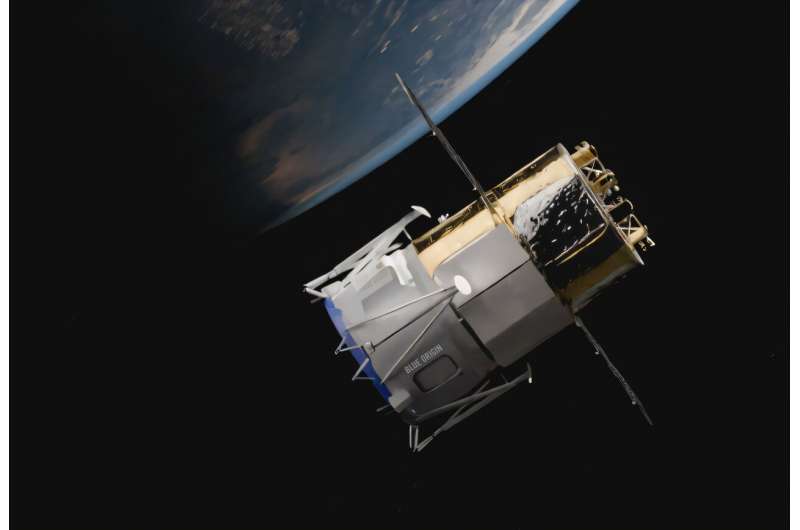
Quick Summary: NASA emphasizes that the lander tests being conducted ahead of the Artemis III mission will improve the safety of future lunar landings and support humanity’s goal of establishing a lasting presence on the Moon. These efforts also lay the groundwork for future crewed missions to Mars.
Why is Artemis III attracting so much attention?
NASA’s Artemis program is one of the most ambitious space initiatives aimed at returning humans to the lunar surface. One of the most anticipated milestones of the program is the Artemis III mission, which is designed to land astronauts on the Moon and enable them to conduct scientific research there.
In a statement published on July 15, 2026, NASA highlighted the importance of testing the human landing system. According to the agency, landing on the Moon involves far more than launching a powerful rocket. Orbital rendezvous, descent, surface operations, and a safe return all have to work flawlessly.
That is why every test conducted before Artemis III serves as a critical rehearsal that directly influences the success of future missions.

So what exactly will the lander tests validate?
Although NASA’s announcement does not provide detailed technical results, the primary objective is clear. The human landing system must be capable of carrying astronauts from lunar orbit to the surface and then launching back into space afterward.
In systems like these, even a seemingly minor issue can affect mission safety. Fuel management, landing control, communications links, and crew life-support systems are all being tested individually.
A look at spaceflight history makes it easy to understand why this is necessary. The technologies used to land humans on the Moon have changed dramatically since the Apollo era. Modern missions involve longer operations and much more complex mission architectures.
NASA’s approach is built around testing as many scenarios as possible on the ground and in space before the actual mission. That way, unexpected problems are discovered during testing rather than on mission day.
According to NASA, the Artemis program will send astronauts to the Moon to conduct scientific discoveries, create economic opportunities, and lay the foundation for future human missions to Mars.
Is the return to the Moon only about the Moon?
Not really. One of the most notable points in NASA’s statement is the idea that lunar missions are preparation for journeys to Mars. The agency has long described the Moon as a testing ground.
Sending humans to Mars is a far more challenging objective than lunar exploration. Travel times are longer, communication delays are greater, and rescue options are far more limited. For that reason, the operational experience gained on the Moon is incredibly valuable.
Critical technologies such as landers, life-support systems, and surface operations will be tested on the Moon first. If these systems prove successful in the lunar environment, they will provide significant confidence for future Mars missions.
It is fascinating to see how different areas of space exploration connect. For example, our previous article, A New European Super Rocket Concept Challenging Starship, highlighted the importance of heavy-lift capability for future deep-space missions.

What do NASA’s published details tell us?
NASA’s announcement does not include detailed technical performance figures. Even so, the information provided offers insight into the mission timeline and the broader goals of the program.
| Parameter | Value |
|---|---|
| Program | Artemis |
| Mission | Artemis III |
| Focus | Human landing system testing |
| Publication Date | July 15, 2026 |
| Primary Goal | Preparation for a crewed landing on the Moon |
| Long-Term Objective | Lay the groundwork for human missions to Mars |
One notable aspect is that NASA emphasizes strategic goals more than technical specifics. The agency views Artemis not as a single mission, but as part of an exploration program that could span decades.
How could the success of these tests affect future missions?
Reliability in spaceflight is built over time. When a system is used for the first time, many unknowns remain. Every test and every mission increases the amount of data available to engineers.
If the Artemis III efforts succeed, they could help pave the way for more frequent lunar missions in the future. NASA and its partners ultimately aim to establish a more permanent presence around and on the Moon.
The scientific benefits could be substantial as well. Research conducted on the lunar surface may provide clues about the early history of the Solar System while also offering opportunities to test new technologies under real space conditions.
In space exploration, every mission opens the door to another. From deep-space observations to black hole research, many different projects are part of the same larger picture. Our recent article The First of the Missing Black Holes Found in Omega Centauri and the study Magma Oceans May Be Hidden Inside Sub-Neptune Planets illustrate different aspects of humanity’s effort to understand the universe.
What is the connection between lunar missions and space telescopes?
At first glance, a lunar landing system and a space telescope may seem unrelated. However, both depend on advanced engineering, precise control systems, and long-term mission planning.
For example, new solutions developed for the Swift telescope, which has served the scientific community for many years, are providing valuable experience in extending the operational life of spacecraft. We explored examples of this approach in our previous articles, The Final Pegasus Mission to Rescue Swift Has Begun and The LINK Mission Makes a Historic Move for the Swift Telescope.
Knowledge gained in the space industry is often transferred across different types of missions. Technology developed for one mission can unexpectedly become a major advantage in another.

What can we expect next?
NASA’s announcement makes it clear that work on Artemis III is ongoing and that human landing system testing remains central to the program. The agency’s goal is not simply to land astronauts on the Moon, but to make lunar operations regular and sustainable.
Additional testing, integration efforts, and operational preparations in the coming years will be among the most critical elements of the mission schedule. Every successful milestone brings humanity one step closer to expanding its presence on the Moon.
For a long time, returning to the Moon felt like science fiction. Today, engineering teams are methodically validating the systems that could make it a reality. That is the real story behind Artemis III: great discoveries often begin with tests that may not grab headlines but are absolutely essential.
Frequently Asked Questions
What is the primary objective of the Artemis III mission?
Artemis III is designed to land astronauts on the Moon, conduct scientific research, and help establish the foundation for future long-term lunar activities.
Why is the human landing system being tested?
The landing system is critical to astronaut safety. Extensive testing is being conducted to verify system performance and reduce potential risks before the mission.
Are these efforts connected to future Mars missions?
Yes. NASA says the experience gained on the Moon will contribute to the planning and technological foundation of future crewed missions to Mars.
Sources
NASA – Artemis III Lander Test
Editor’s Perspective: Lunar landing footage always makes headlines, but what fascinates me even more is the invisible preparation behind those moments. If the Artemis III tests succeed, we will remember them not just as a mission milestone, but as a genuine step toward a more permanent human future on the Moon.
Bir Yorum Yazın