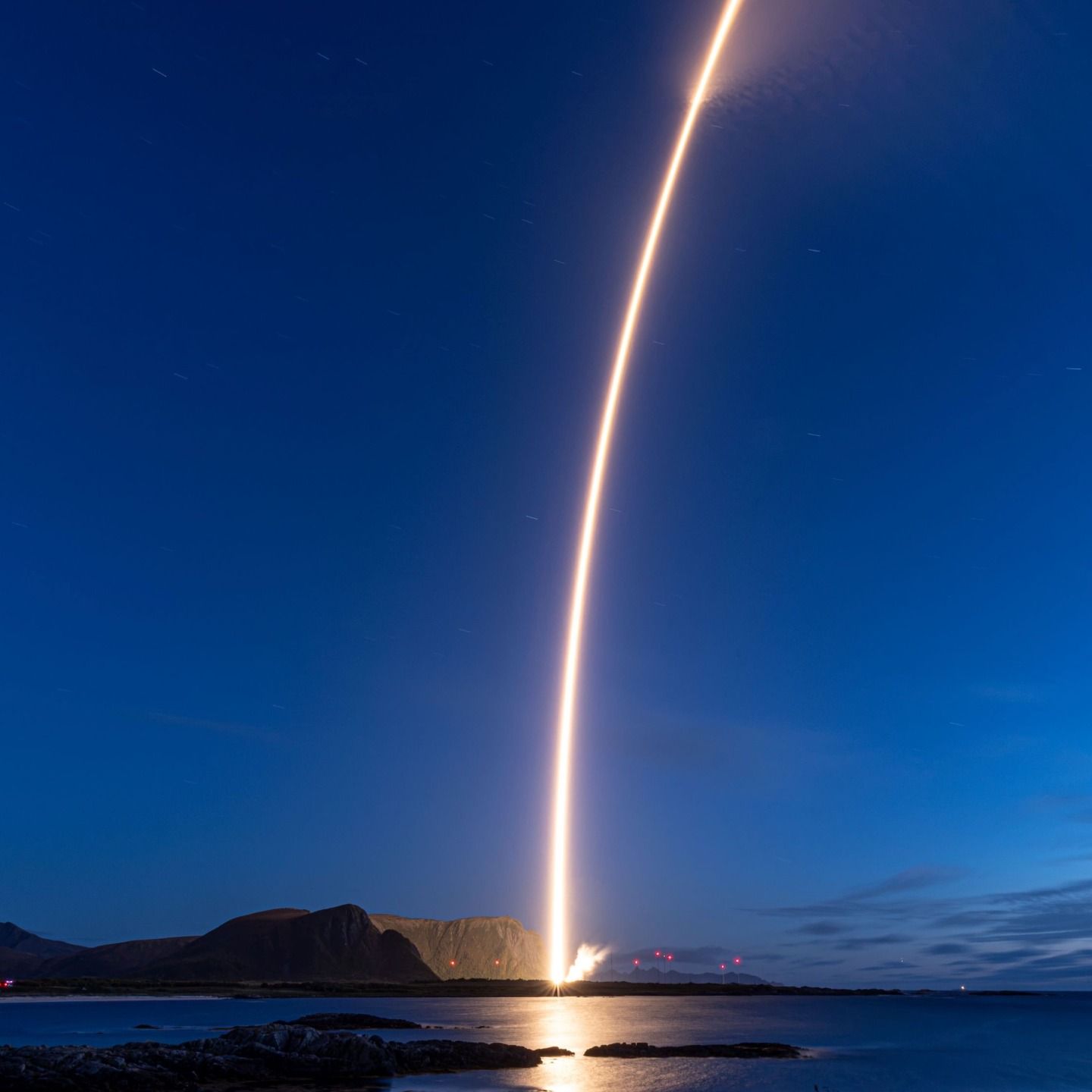
Quick Summary: German space company Isar Aerospace has successfully reached orbit on the second launch attempt of its Spectrum rocket. This achievement is considered a historic milestone for Europe’s private space sector and strengthens the company’s position in commercial satellite launch services.
A New Chapter in Europe’s Private Space Race
Recent developments in the space industry have been steadily increasing the role of private companies in this field. At this very point, Germany-based Isar Aerospace made history by reaching orbit on its second launch attempt with its Spectrum rocket. This success carries immense significance not only for the company but for all of Europe’s private space ventures.

So why is this success so significant? Because Isar Aerospace’s first attempt, which took place last year, ended with the rocket crashing and exploding shortly after liftoff. However, the company learned from this failure, reviewed its engineering processes, and managed to hit the target on the second try. This once again highlights how challenging and patience-demanding space endeavors truly are.
What Are the Technical Specifications of the Spectrum Rocket?
Developed by Isar Aerospace, Spectrum is designed as a two-stage launch vehicle. The company’s goal is to carry small and medium-sized satellites into low Earth orbit (LEO). In this field, SpaceX’s Falcon 9 rocket currently holds a dominant share of the market. However, Isar Aerospace aims to carve out its own niche with a smaller, more flexible approach.
One of Spectrum’s most notable features is its use of a cryogenic propulsion system. This system enables the rocket to operate more efficiently while also increasing its payload capacity. According to the company, Spectrum can carry approximately 1,000 kilograms to a 700-kilometer sun-synchronous orbit (SSO).
| Parameter | Value |
|---|---|
| Orbit Type | Low Earth Orbit (LEO) |
| Payload Capacity (SSO) | ~1000 kg |
| Propulsion System | Cryogenic (Liquid Oxygen / Liquid Methane) |
| Number of Stages | 2 |
| Launch Attempt | 2nd (Successful) |
These technical specifications are crucial for Spectrum to compete with other small satellite launch vehicles in the industry. Particularly, the use of liquid methane fuel offers advantages both in terms of cost and potential reusability. Isar Aerospace aims to eventually make its rockets reusable by advancing this technology.
What Does This Success Mean for the European Space Sector?
Europe’s space activities have long been conducted through government-backed institutions such as ESA (European Space Agency) and organizations like Arianespace. However, the influence of the private sector in this domain has been growing in recent years. Isar Aerospace’s success demonstrates how significant feats private space companies in Europe can achieve.
This development also alleviates, to some extent, Europe’s concerns about independent access to space. Especially after the Ukraine war, the reduced reliance on Russia’s Soyuz rockets increased Europe’s need for its own launch vehicles. At this critical juncture, the success of private companies like Isar Aerospace is vital for Europe’s space independence.

Experts believe this success will also serve as an inspiration for other European private space ventures. Companies like UK-based Orbex and Skyrora are continuing their work toward similar goals. This achievement by Isar Aerospace is likely to boost the motivation of these companies and intensify competition in the sector.
So What Sets Isar Aerospace Apart?
One of Isar Aerospace’s biggest advantages lies in its founding philosophy. The company was established in 2018 by three engineers who graduated from the Technical University of Munich. The founders aimed to break away from the slow, bureaucratic processes of the space industry and adopt a faster, more flexible approach. This vision enabled the company to make significant progress in a short time.
Another key feature of the company is its vertical integration strategy. Isar Aerospace produces many critical components, from rocket engines to avionics systems, in-house. This allows them to reduce costs and accelerate the production process. Additionally, this approach lessens their dependence on external suppliers.
This success by Isar Aerospace could also spark increased interest in fundamental astronomy topics like [How Did the Sun Form? Surprising Answers from 4.6 Billion-Year-Old Space Dust](https://galaktikuzay.com/gunes-nasil-olustu-46-milyar-yillik-uzay-tozundan-sasirtici-yanitlar). Because every successful space mission enables us to better understand and explore the universe.
The Strategy Behind Success on the Second Attempt
Following the failure of the first attempt, the Isar Aerospace team conducted a comprehensive analysis to identify the root cause. The investigations revealed a software error in the rocket’s avionics systems. To fix this, the company rewrote the software from scratch and subjected it to extensive testing.
This process once again underscored the importance of engineering discipline in the space industry. Isar Aerospace’s CEO, Daniel Metzler, stated, “The failure on the first attempt didn’t discourage us; on the contrary, it made us more ambitious. Our team worked around the clock and deserved this success.” These words reflect the company’s perseverance and determination.
“This success proves the immense potential of Europe’s private space sector. We are growing not just as a company, but as an entire ecosystem.” – Daniel Metzler, CEO of Isar Aerospace
Following this success, the company plans to begin commercial launch operations. Aiming to provide regular satellite launch services with Spectrum in the coming years, Isar Aerospace could also pave the way for major scientific missions like [NASA’s Roman Telescope Sets Out to Illuminate the Dark Universe](https://galaktikuzay.com/nasanin-roman-teleskobu-karanlik-evreni-aydinlatmak-icin-yola-cikti).
Competition Heats Up in the Space Launch Market
Isar Aerospace’s success is likely to intensify competition in the global space launch market. Currently, SpaceX dominates the market, conducting nearly weekly launches with its Falcon 9 rocket. However, the small satellite market is too small to attract the attention of major players, creating significant opportunities for specialized companies.
In addition to Isar Aerospace, US-based companies like Rocket Lab and Astra are also actively operating in this market. Furthermore, companies from China and India are showing increasing interest in this field. This competition will contribute to lowering launch costs and making access to space even easier.

These developments in the space launch market could also accelerate planetary science research like [Mysterious 10-Sided Cloud Structure Discovered at Saturn’s South Pole](https://galaktikuzay.com/saturnun-guney-kutbunda-gizemli-10-kenarli-bulut-yapisi-kesfedildi). Because more launches mean more scientific missions.
What Can We Expect in the Coming Period?
With this success, Isar Aerospace has set its sights even higher. The company plans to develop a reusable version of the Spectrum rocket within the next few years. This could significantly reduce launch costs and make the company even more competitive in the industry.
Additionally, the company’s long-term goals include missions to the Moon and Mars. Although these goals may seem like a dream for now, the perseverance and determination shown by Isar Aerospace suggest they are achievable.
In conclusion, Isar Aerospace’s success has gone down in history not just as a company achievement, but as a symbol of Europe’s rise in the space industry. It is certain that we will see even more fruits of this success in the coming years.
Editor’s Note: This news genuinely excited me. The rapid maturation of Europe’s private space sector is the most tangible proof that space is no longer solely the domain of governments. The fact that Isar Aerospace didn’t give up after the first failure and achieved this success on the second attempt is a true example of engineering grit. I believe this success will be a huge inspiration, especially for young engineers and entrepreneurs.
Frequently Asked Questions
When did Isar Aerospace’s Spectrum rocket reach orbit?
Isar Aerospace successfully reached orbit on the second launch attempt of its Spectrum rocket on September 5, 2026.
What is the payload capacity of the Spectrum rocket?
The Spectrum rocket can carry approximately 1,000 kilograms to a 700-kilometer sun-synchronous orbit (SSO).
Why did Isar Aerospace’s first launch attempt fail?
The first launch attempt failed due to a software error detected in the rocket’s avionics systems. The company fixed this error and achieved success on the second attempt.
Bir Yorum Yazın