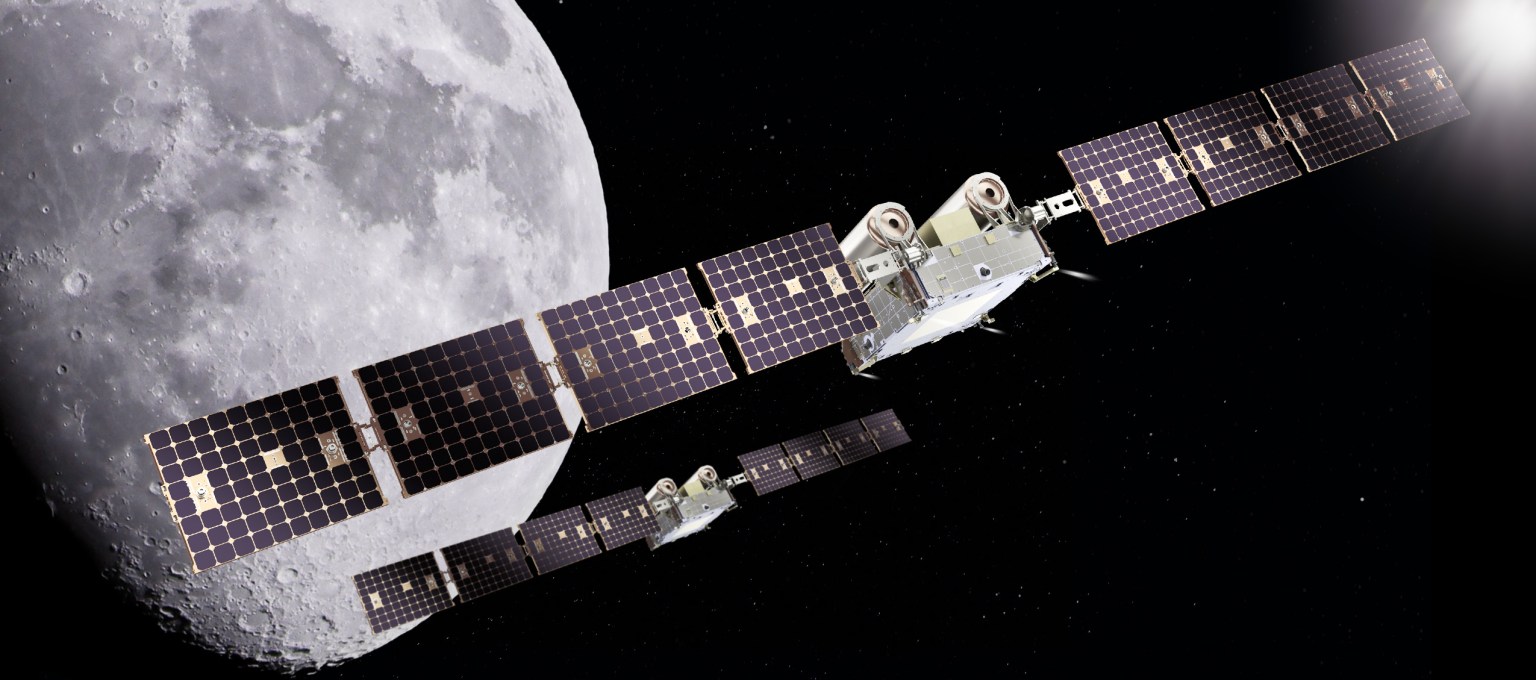
Quick Summary: NASA has announced a new technology demonstration mission featuring two identical small spacecraft that will operate in lunar orbit. Called CAPSTONE 02, the mission aims to test technologies in real space conditions that are essential for the Artemis program, future lunar bases, and deep-space exploration.
Why is NASA launching a new technology mission around the Moon?
NASA’s plans for returning to the Moon go far beyond simply sending astronauts. The agency’s long-term goal is to establish a sustainable human presence both in lunar orbit and on the lunar surface. Achieving that requires testing new technologies in real mission environments.
Announced on July 24, 2026, the CAPSTONE 02 mission is the latest step in that strategy. According to NASA, the mission will involve two identical small spacecraft operating in lunar orbit. These vehicles are expected to help mature systems that could be used in future exploration missions.
As the Artemis program continues to expand, interest in low-cost, agile, and rapidly developed spacecraft is growing. While small spacecraft are not a replacement for major missions, they provide ideal platforms for testing higher-risk technologies.

What exactly will CAPSTONE 02 test?
NASA’s initial announcement did not provide extensive technical details, but the mission’s core objective is clear: to evaluate technologies needed for operations around the Moon under real-world conditions.
The agency says the mission will support the Artemis program, potential future lunar bases, and deep-space missions aimed at more distant destinations. That suggests a wide range of technologies could be assessed, from communications systems and navigation to autonomous mission management and orbital operations.
The CAPSTONE name is already familiar to many space enthusiasts. An earlier CAPSTONE mission helped validate a unique orbit around the Moon. The new mission appears intended to build on that legacy and push it further.
Developing small spacecraft that can operate reliably around the Moon provides valuable experience not only for lunar missions, but also for future exploration efforts extending to Mars and beyond.
NASA has increasingly focused on technology demonstrations across a variety of mission scales. For example, in our previous article, NASA Selects Falcon Heavy for the SunRISE Mission, we saw how next-generation space technologies are advancing alongside scientific missions.
What are the advantages of using two identical spacecraft?
One of the most notable aspects of the mission is the use of two identical vehicles operating together. This approach could allow researchers to compare the performance of the same technology under different conditions.
Using multiple spacecraft also improves mission resilience. If one vehicle encounters an unexpected issue, data can continue to be collected from the other. It also enables simultaneous measurements from different locations.
The idea of small spacecraft working in fleets or coordinated teams is attracting growing interest in space exploration. Similar approaches could eventually be used to build communications networks around the Moon or support surface operations.
| Parameter | Value |
|---|---|
| Mission Name | CAPSTONE 02 |
| Announcement Date | July 24, 2026 |
| Number of Spacecraft | 2 |
| Spacecraft Type | Identical small spacecraft |
| Mission Region | Lunar orbit |
| Primary Objective | Technology demonstration and validation |
| Supported Program | Artemis |
| Long-Term Goals | Lunar base development and deep-space exploration |

What does this mission mean for the Artemis program?
The Artemis program is often associated with rockets and astronauts, but behind the scenes lies a much broader technology ecosystem. Navigation systems, communications networks, power solutions, and autonomous control software are all critical components of that infrastructure.
Missions like CAPSTONE 02 can be viewed as small but important steps toward building the permanent infrastructure that will one day operate around the Moon. Just because a technology works near Earth does not guarantee it will perform equally well in lunar space. That is why testing in the actual operational environment is so valuable.
If the goal is a lasting human presence on the Moon, hundreds of smaller technological challenges must be solved in advance. Technology demonstration missions exist for precisely that reason.
We see the impact of this approach in other areas as well. For example, discoveries such as the First Rocky Planet with an Atmosphere Found in the Habitable Zone rely on highly sophisticated technologies developed over many years.
Could small spacecraft be the future of space exploration?
Not on their own, but they clearly appear destined to become an important part of the future spaceflight ecosystem. Lower costs, shorter development cycles, and greater mission flexibility are among their biggest advantages.
Large telescopes, heavy-lift rockets, and crewed spacecraft will always remain essential. Even so, small spacecraft allow researchers to test new ideas far more quickly.
Scenarios involving large numbers of small spacecraft working together are frequently discussed, especially for future lunar communications networks, data relay systems, and scientific observation platforms.
Technological innovation is also driving progress in exoplanet research. As highlighted in our article The First Moon Beyond the Solar System May Have Been Found, unusual discoveries like these would not be possible without advanced observational tools.
In that sense, NASA’s new mission is about more than the Moon. It also offers important clues about how future space missions may be designed.

What can we expect next?
NASA’s announcement provided only limited technical details. As a result, additional information about the mission profile, onboard systems, and launch plans is expected to be released in the coming months.
Even with the currently available information, NASA’s lunar strategy appears to be following a clear direction. The agency is not focused solely on sending people to the Moon; it is also steadily building the technological foundation needed for long-term exploration.
The Moon is no longer just a destination for short visits. It is becoming a hub for scientific research, technology testing, and future deep-space missions. CAPSTONE 02 stands out as another example of this ongoing transformation.
Frequently Asked Questions
What is the CAPSTONE 02 mission?
It is a technology demonstration mission announced by NASA that will involve two identical small spacecraft operating in lunar orbit.
What is the mission’s objective?
Its goal is to test technologies in real space conditions that could support the Artemis program, future lunar bases, and deep-space exploration.
Why is the mission important?
By validating the performance of small spacecraft around the Moon, it could help make future exploration missions safer and more efficient.
Sources
Editor’s Perspective: When people talk about lunar missions, giant rockets usually steal the spotlight. Yet I think some of the most exciting developments are hidden within these smaller technology demonstrations. Every piece of infrastructure we hope to build around the Moon in the future will first need to prove itself through experiments that may seem modest today, but are absolutely essential.
Bir Yorum Yazın