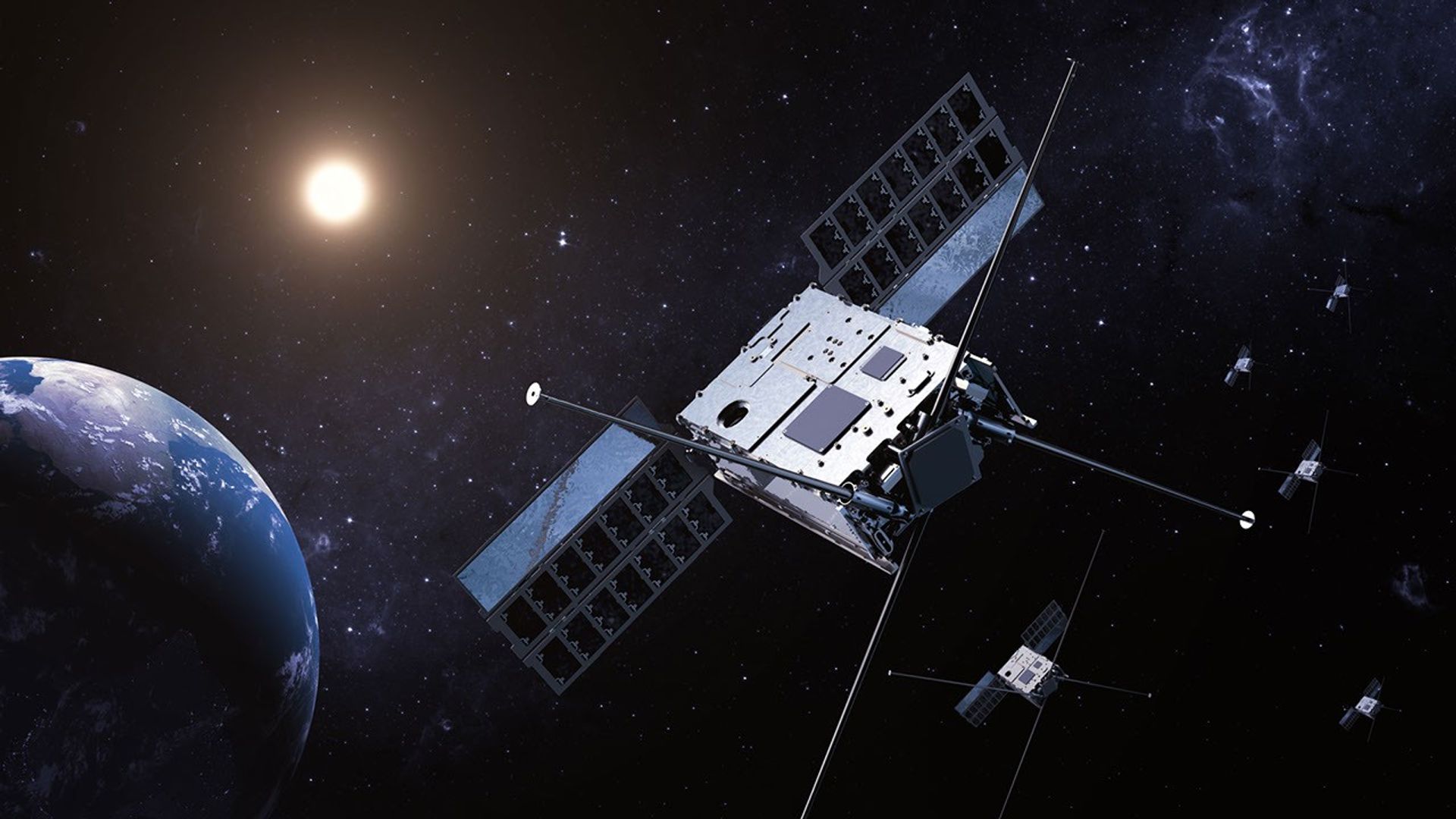
Quick Summary: NASA has changed launch vehicles for its SunRISE mission, a constellation of six small satellites designed to monitor solar radio bursts. Originally slated to fly on Vulcan Centaur, the mission will now launch aboard a SpaceX Falcon Heavy. SunRISE aims to improve our understanding of how solar storms affect Earth and provide earlier warning capabilities.
Why did NASA switch to Falcon Heavy?
NASA has selected a new launch vehicle for the SunRISE mission, an important part of the agency’s space weather research efforts. According to information reported by Space.com, NASA now plans to launch the mission on a SpaceX Falcon Heavy rather than the Vulcan Centaur rocket developed by United Launch Alliance.
The decision is the latest example of missions once expected to fly on Vulcan Centaur being reassigned to competing launch vehicles. While the report did not provide detailed technical reasons for the change, the outcome is clear: SunRISE will now launch aboard Falcon Heavy.
Falcon Heavy is widely regarded as one of the most powerful operational rockets currently in service. It is frequently chosen for missions that require high-energy trajectories or delivery to complex orbits.
For those who follow the space industry, the move is not especially surprising. Competition in the launch services market has intensified in recent years, with organizations weighing cost, schedule, and mission requirements together. As a result, changes in launch vehicles have become increasingly common.
A new step forward in space weather research?
SunRISE will not solve every challenge in space weather forecasting on its own. However, studying the Sun’s radio emissions in greater detail could help answer several long-standing scientific questions.
In particular, understanding when and how high-energy particles are accelerated may contribute to the development of more reliable forecasting systems in the future. That knowledge could prove valuable for satellites in Earth orbit as well as future missions to the Moon and Mars.
While NASA’s choice of Falcon Heavy may be the headline-grabbing aspect of the story, the mission’s scientific goals are arguably even more significant. The concept of six small satellites working together as a giant radio telescope is an impressive example of how creative engineering can enable groundbreaking scientific discoveries.
FAQ
What is the goal of the SunRISE mission?
The mission aims to improve our understanding of space weather by studying solar radio bursts.
How many satellites are part of SunRISE?
The mission consists of six small satellites working together.
Why was Falcon Heavy selected?
NASA chose SpaceX’s Falcon Heavy rocket instead of Vulcan Centaur to launch the mission. Detailed reasons for the decision were not provided in the report.
Sources
Editor’s Perspective: My favorite aspect of SunRISE is the idea of using six small satellites working together instead of building a massive space observatory. In science, progress often comes not from larger hardware but from more creative solutions. Even a slightly better understanding of the Sun’s behavior could have far-reaching implications for future human spaceflight missions.
Bir Yorum Yazın