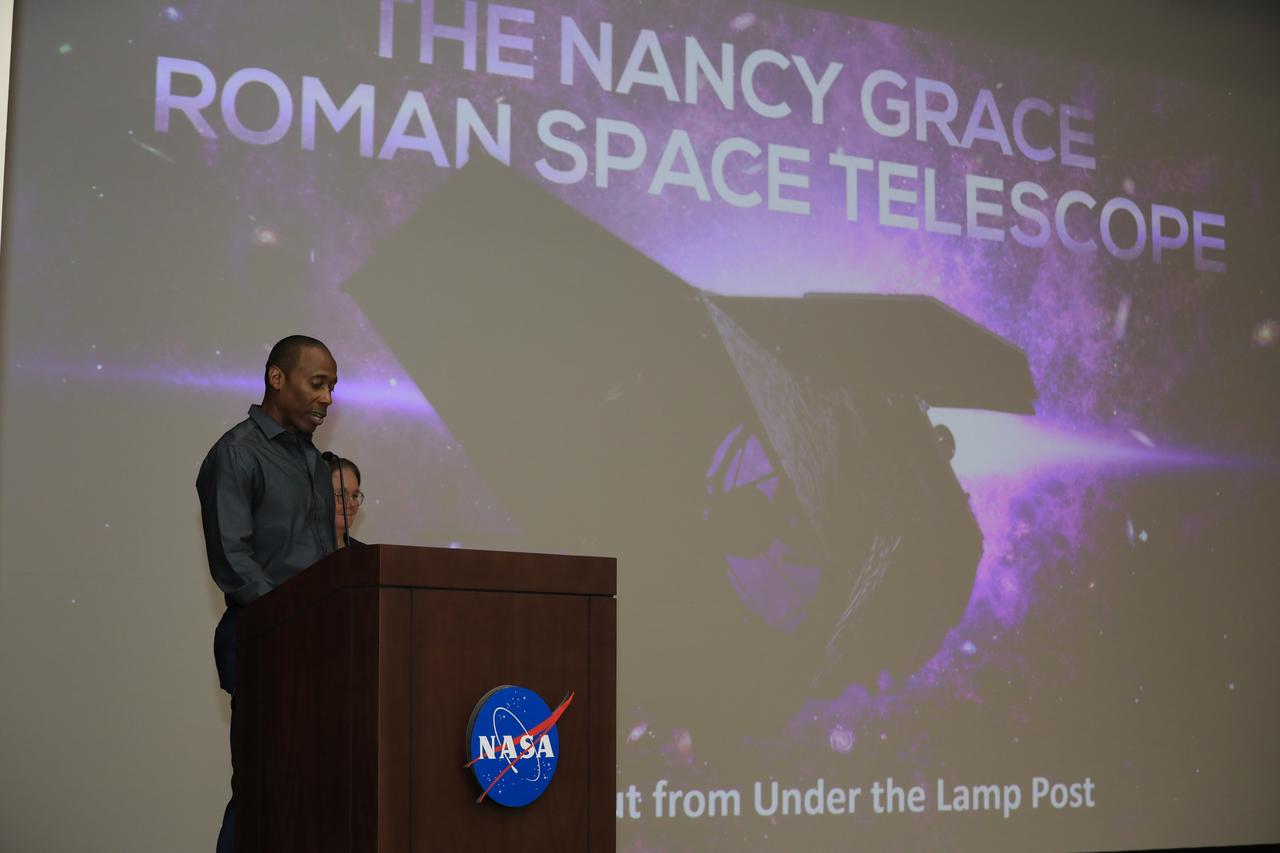
Quick Summary: NASA’s Nancy Grace Roman Space Telescope is set to launch into space on August 30, 2026, aboard SpaceX’s Falcon Heavy rocket. The telescope will study dark energy, dark matter, and distant exoplanets, investigating the universe’s expansion rate and galaxy formation. So, how will this new eye change the world of astronomy?
Why Is the Roman Telescope So Important?
Everything we see when we look at the sky actually makes up only 5% of the universe. The remaining 95% consists of mysterious entities we call dark matter and dark energy. This is precisely what NASA’s new eye was designed to illuminate—the invisible universe.
The Nancy Grace Roman Space Telescope is named after Dr. Nancy Grace Roman, NASA’s first chief astronomer, who played a critical role in the creation of the Hubble Space Telescope. She is also known as the “Mother of Hubble.” Now, the telescope bearing her name will have a much wider field of view than Hubble and will be able to peer into the depths of the universe much faster.

Launch Date and Mission Details: When, Where, How?
NASA has announced that preparations for the Roman Telescope’s launch are complete, with a target date of August 30, 2026. The telescope will launch aboard SpaceX’s powerful Falcon Heavy rocket from Kennedy Space Center in Florida. This mission is also a testament to how far NASA’s collaboration with the private sector has come. As we saw in our previous report, [SpaceX Sets Record: Two Falcon 9 Rockets Launched 38 Minutes Apart](https://galaktikuzay.com/spacex-rekor-kirdi-iki-falcon-9-roketi-38-dakika-arayla-firlatildi), SpaceX has become one of NASA’s most important launch partners.
After launch, the telescope will settle into the L2 Lagrange Point, about 1.5 million kilometers from Earth. This point, also home to the James Webb Space Telescope, is a special region where gravity and solar winds are in balance. From there, Roman will be able to study the deepest corners of the universe.
So, What Exactly Will the Roman Telescope Do?
The Roman Telescope has three primary missions: investigating dark energy, mapping dark matter, and directly imaging distant exoplanets. Each of these is a revolutionary endeavor that alone could change the history of astronomy.
Dark energy is the mysterious force accelerating the universe’s expansion. By observing billions of galaxies, Roman will measure how this expansion has changed over time. This could provide critical clues about the nature of dark energy. Dark matter, on the other hand, will be mapped by studying the gravitational effects on galaxies and galaxy clusters.
Exoplanet research is also one of Roman’s most exciting missions. The telescope will carry a coronagraph designed for direct imaging of planets. This instrument blocks starlight, making faint planets around stars visible. So far, only a few dozen exoplanets have been directly imaged; Roman could increase that number to hundreds.
| Parameter | Value |
|---|---|
| Launch Date | August 30, 2026 |
| Launch Vehicle | SpaceX Falcon Heavy |
| Orbit | L2 Lagrange Point (1.5 million km) |
| Mirror Diameter | 2.4 meters |
| Field of View | 100 times wider than Hubble |
| Primary Missions | Dark energy, dark matter, exoplanets |
| Mission Duration | 5 years (extendable to 10) |
The Third Great Observatory After Hubble and Webb
The Roman Telescope is considered part of NASA’s Great Observatories program, which previously included Hubble and the James Webb Space Telescope. Roman will serve as a bridge between the two. It is designed to combine Hubble’s wide field of view with Webb’s deep infrared capabilities.
In particular, the early universe galaxies discovered by Webb can be studied in much greater detail thanks to Roman’s wide field of view. As we mentioned in our report, [JWST Shows Early Universe Galaxies Could Be 4 Times Larger](https://galaktikuzay.com/jwst-erken-evrendeki-galaksilerin-4-kat-daha-buyuk-olabilecegini-gosterdi), Webb is sending us astonishing data about the universe’s earliest epochs. Roman will be able to place this data into a broader perspective.

Hundreds of Thousands of Supernovae and a New Map of the Universe
One of the Roman Telescope’s most ambitious goals is to observe more than 100,000 supernovae during its mission. Supernovae are violent explosions of stars and are among the most important tools for measuring the universe’s expansion rate. By observing this many supernovae, we will be able to measure the influence of dark energy with much greater precision.
The telescope will also scan the entire sky several times, creating a massive map of galaxies. This map will help us understand the large-scale structure of the universe. Seeing how galaxies cluster together is the most effective way to understand the distribution of dark matter.
How Will Roman’s Discoveries Affect Our Daily Lives?
The findings from space telescopes often seem abstract, but their implications for technology and everyday life are substantial. Image processing algorithms developed from Hubble’s observations are now used in medical imaging. Webb’s spectroscopy techniques are inspiring the discovery of new materials.
Similarly, the technologies developed for Roman will bring innovations, particularly in artificial intelligence and big data analytics. The telescope will generate approximately 11 terabytes of data per day. The algorithms used to process this massive data could also offer solutions to big data challenges here on Earth.

Final Status Before Launch: Is Everything on Track?
NASA officials have confirmed that the telescope has passed all tests successfully and is ready for launch. The Falcon Heavy rocket is also positioned on the launch pad. If weather conditions permit, the launch will take place on August 30.
This launch is also a significant mission for SpaceX. Falcon Heavy has carried numerous commercial and military satellites into orbit, but carrying a scientific flagship like Roman carries a different kind of prestige. As seen in our report [Did Starship Sink in the Ocean on Its 13th Test Flight? Critical Statement from Elon Musk](https://galaktikuzay.com/starship-13-test-ucusunda-okyanusa-mi-gomuldu-elon-musktan-kritik-aciklama), SpaceX’s success in this arena could pave the way for the company to take on more responsibility in future deep space missions.
When Will the Roman Telescope Send Its First Data?
After launch, it will take about 3 months for the telescope to reach the L2 point. During this time, all systems will be activated, and the mirrors will be aligned. The first scientific data is expected to start arriving in early 2027.
The first images will be historic moments, much like Hubble’s first deep field images. Scientists have chosen a star-forming region in the Large Magellanic Cloud as Roman’s first target. This image will be a showcase of the telescope’s full capabilities.
Frequently Asked Questions
How much more powerful is the Roman Telescope compared to Hubble?
Roman’s mirror diameter is the same as Hubble’s (2.4 meters), but its field of view is 100 times wider. This means it can observe a much larger area of the sky at once.
When will the Roman Telescope launch?
NASA has set a target date of August 30, 2026. The launch will take place from Kennedy Space Center in Florida aboard a SpaceX Falcon Heavy rocket.
How much does the Roman Telescope cost?
The total mission cost has been announced at approximately $3.2 billion. This is about one-third of the James Webb Telescope’s cost.
Editor’s Perspective: The launch of the Roman Telescope will open a new chapter in the history of astronomy. Unraveling the secrets of the dark universe might just be humanity’s greatest scientific adventure. Every piece of data this telescope sends back could fundamentally change what we know about how the universe formed. Especially if the 100,000 supernova observations are completed, everything we know about dark energy could be rewritten. My eyes are on the sky—I’m eagerly counting down to August 30.
Bir Yorum Yazın