Quick Summary: SpaceX successfully launched four astronauts to the International Space Station (ISS) aboard a Falcon 9 rocket on October 1, 2026, as part of NASA’s Crew-13 mission. The Crew Dragon ‘Grace’ capsule will dock with the station after an approximately 24-hour journey.
SpaceX Crew-13 Mission Begins: Countdown Ends for Space Journey
An exciting day for space enthusiasts! The Crew-13 mission, a joint effort by NASA and SpaceX, launched successfully today (October 1) at 6:10 PM Turkish Time (TRT) from Launch Complex-40 in Florida. The Falcon 9 rocket carried the Crew Dragon capsule “Grace” into low Earth orbit (LEO), and the four astronauts are now officially on their way to the ISS.
This launch also brings several firsts in terms of space exploration. Notably, this is the second space mission for the Crew Dragon capsule Grace. Having previously flown to the ISS on the private Axiom-4 mission last summer, the capsule once again demonstrates how far SpaceX has come in terms of reusability.

Who Commands Crew-13 and Why Is This Mission Special?
NASA astronaut Jessica Watkins commands the Crew-13 mission. Watkins has flown to space aboard a Crew Dragon before. However, this mission etches her name into history: Watkins becomes the first NASA astronaut to fly to space a second time aboard a Crew Dragon capsule. This is a significant milestone for the reliability and reusability of SpaceX capsules.
The other three astronauts accompanying Watkins form the mission’s specialist crew. The team will remain aboard the ISS for about six months, conducting various scientific experiments and maintenance work on the station.
Falcon 9’s Landing and the Mission’s Next Steps
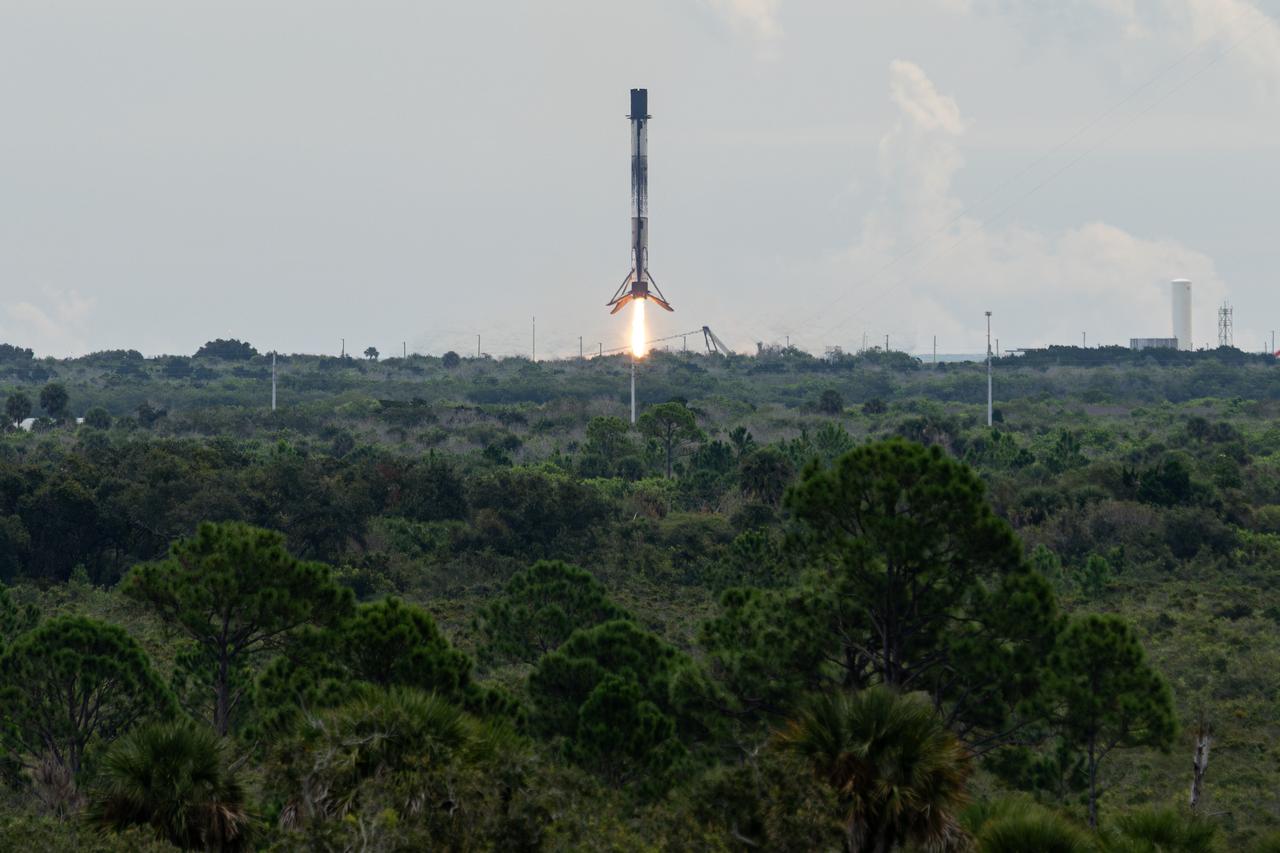
Immediately after launch, the Falcon 9’s first stage successfully landed at the landing zone at Cape Canaveral. This marked another successful example of how mature SpaceX’s strategy of reusing rocket stages has become. The rocket’s landing was one of the most thrilling moments of the mission.
The astronauts are now on an approximately 24-hour journey inside the Crew Dragon ‘Grace.’ During this time, the capsule will perform orbital maneuvers to rendezvous with the ISS, followed by docking. Docking is expected to occur tomorrow morning. Such missions will proceed similarly to processes we’ve covered before, like when Crew-13 reached the station.
| Parameter | Value |
|---|---|
| Launch Time | 11:10 EDT (6:10 PM TRT) |
| Launch Site | Launch Complex-40, Florida |
| Capsule Name | Crew Dragon ‘Grace’ |
| Mission Duration | ~6 Months (at ISS) |
| Journey Duration | ~24 Hours |
| Commander | Jessica Watkins (NASA) |
| Capsule’s Flight Number | 2nd Mission (After Axiom-4) |
Why Is This Mission So Important?
The Crew-13 mission is not just about reusing a spacecraft. It also signifies that space is no longer solely the domain of government agencies. The private sector taking on such critical missions lays the groundwork for future projects like space tourism and commercial space stations.
Moreover, such missions are vital for the continuation of scientific research aboard the ISS. Experiments conducted on the station provide a wide range of knowledge, from how the human body is affected in space to the production of new materials. This information is also critical for future long-duration missions to the Moon and Mars.

What Will the Journey to the Space Station Be Like?
After launch, the Crew Dragon capsule will perform a series of maneuvers in Earth orbit. During this process, the astronauts will check the capsule’s systems and prepare for the rendezvous with the ISS. Throughout the journey, the crew will also have the opportunity to enjoy the stunning views of Earth. Such missions are meticulously planned, as seen in the process when the countdown began for the Crew-13 mission.
After docking, the astronauts will join the Expedition 75 crew awaiting them on the station. This reunion will be an important step for the continuation of routine life and scientific work on the station.
Space Missions and Reusability
SpaceX’s reusable rocket and capsule system significantly reduces the cost of space travel. The Falcon 9’s first stage and Crew Dragon capsules can be used multiple times. This democratizes access to space and paves the way for more frequent space missions. Just like Starship’s satellite deployment success, this reinforces SpaceX’s leadership in the space industry.
In the coming period, these technologies will be built upon for larger projects, such as returning to the Moon under the Artemis program and sending humans to Mars. Reusability will be the key to achieving these grand goals.

Next Stop: Docking and Science
With the Crew-13 team’s arrival at the ISS, scientific work on the station will accelerate. The crew will conduct experiments in fields such as human health, biology, physics, and materials science in the microgravity environment. The results of these experiments will be used to improve life on Earth and prepare for longer-duration space missions.
The successful completion of the mission will go down in history as another testament to the strong collaboration between NASA and SpaceX. Space exploration appears poised to continue unabated with such successful missions.
From the Editor’s Desk: I have to admit, watching this launch gave me goosebumps. Jessica Watkins flying to space a second time aboard a Crew Dragon is a revolutionary event that we all might be overlooking. It’s the strongest proof that spacecraft can now be reused like ‘airplanes’ and that space travel is becoming routine. I’m confident that in the next decade, we’ll see these capsules carrying travelers to the Moon. This mission is a giant leap for humanity’s future in space.
Frequently Asked Questions
When was the Crew-13 mission launched?
The SpaceX Crew-13 mission launched successfully on October 1, 2026, at 6:10 PM Turkish Time (11:10 EDT) from Launch Complex-40 in Florida.
How will the Crew-13 crew reach the ISS?
The crew will dock with the International Space Station after an approximately 24-hour journey aboard SpaceX’s reusable Crew Dragon ‘Grace’ capsule.
Why is the Crew-13 mission significant?
This mission is significant because it marks the second use of the Crew Dragon capsule and makes NASA astronaut Jessica Watkins the first person to fly to space a second time aboard a Crew Dragon. It also ensures the continuity of scientific research aboard the ISS.
Bir Yorum Yazın