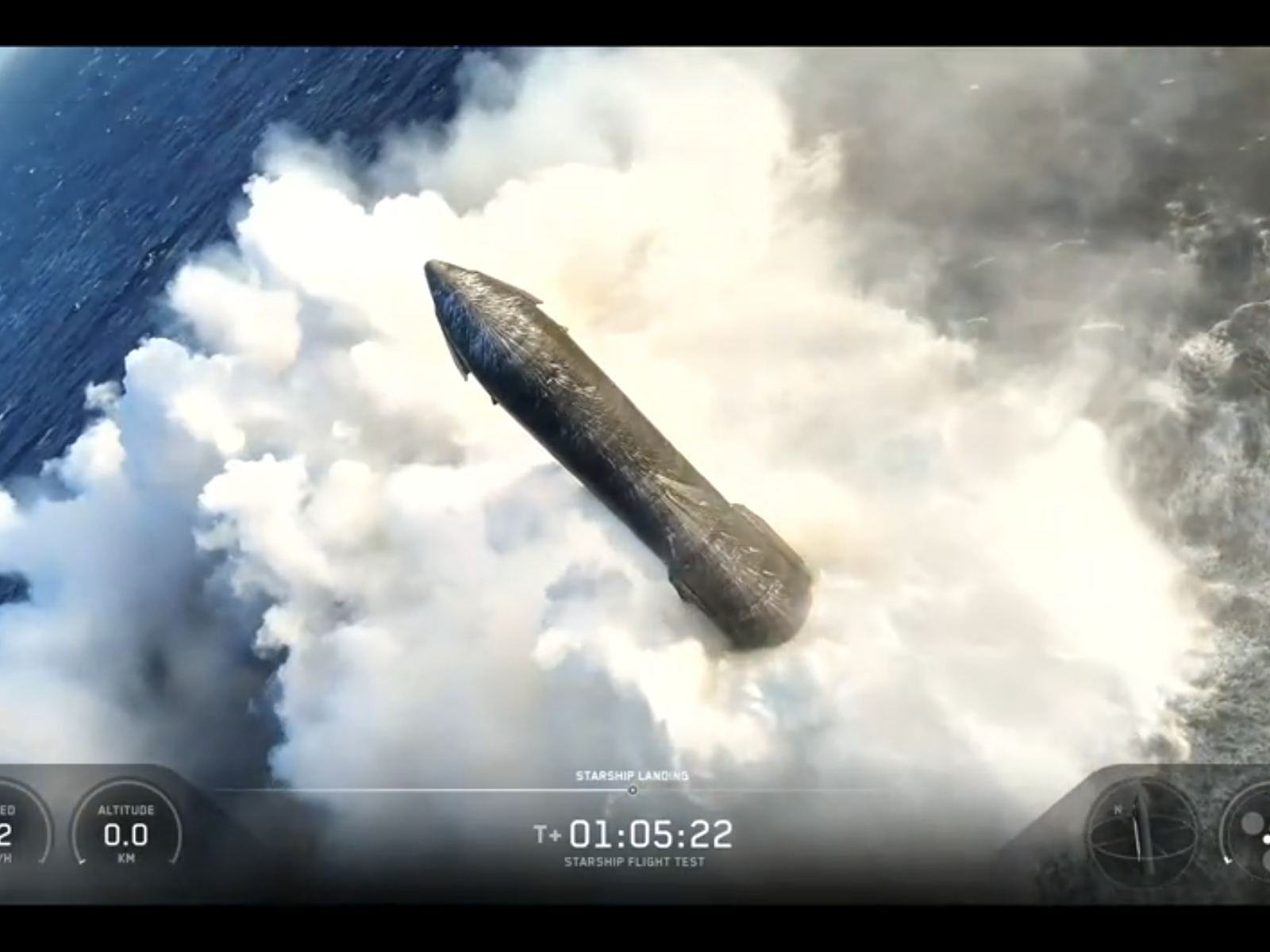
Quick Summary: During Starship’s 13th test flight, SpaceX launched next-generation Starlink satellites and achieved the vehicle’s softest splashdown to date. The company has yet to complete a full orbital mission around Earth, but it continues gathering critical data for lunar missions, in-orbit refueling, and future catch-and-recovery tests.
Why is Starship Flight 13 attracting attention?
SpaceX’s giant Starship rocket system made headlines again during its 13th test flight. This time, the focus was not only on carrying next-generation Starlink satellites. The real talking point was the vehicle’s remarkably gentle splashdown at the end of the mission.
The company describes it as the most controlled and softest water landing it has achieved so far. The Starship program has advanced in stages for years, with each flight designed to collect data for the next step in development.
Even so, there is still a long road ahead. To date, SpaceX has not successfully completed a full orbital mission with Starship. While Flight 13 did not directly achieve that milestone, it provided valuable new information that improves confidence in the system.

So why hasn’t Starship completed a full orbital mission yet?
It’s a question that comes up frequently. Starship now needs to move beyond being simply an experimental vehicle. NASA has selected Starship as the lunar landing system for astronauts participating in the Artemis IV mission.
According to current plans, that mission is scheduled for 2028. To make it possible, however, SpaceX must clear several critical milestones.
First, a Starship vehicle must reach orbit and complete a full mission. After that, the goal is for the spacecraft to return safely to Earth and be caught in midair by the Mechazilla system at Starbase.
The company has already demonstrated this catch method with Super Heavy boosters. Repeating that achievement with the Starship upper stage, however, will be a far more complex challenge.
Nearly a decade has passed since Elon Musk first unveiled the concept in 2016. During that time, the design evolved, the name changed, and the technical objectives matured. Yet the core vision has remained the same: creating a fully reusable heavy-lift space transportation system.
Why is NASA watching Starship so closely?
For NASA, Starship is far more than just another rocket. It is a key component of the agency’s plans to establish a sustained human presence on the Moon.
Under the Artemis program, astronauts will be transported to lunar orbit. A specialized lunar version of Starship will then take over and deliver the crew to the surface.
Making that happen requires more than successful launches.
SpaceX must demonstrate in-orbit refueling. It also needs to complete the tanker variant, develop the lunar lander version, and validate life-support systems capable of sustaining astronauts.
In short, the to-do list remains extensive. That is why every Starship flight is closely monitored by NASA.
“Congratulations on the launch of Flight 13. I’m excited about what we’ll learn from this mission. When Starship enters service at full capability, its potential will be transformative and help ensure we never leave the Moon behind again.” — NASA Administrator Jared Isaacman
Isaacman’s statement clearly reflects NASA’s interest in the project. While the agency recognizes the risks involved, it believes Starship has the potential to usher in a new era of human spaceflight.

What were the key takeaways from Flight 13?
While the report did not provide an extensive set of numerical details, it offered several useful indicators of the program’s current status.
| Parameter | Value |
|---|---|
| Test flight number | 13 |
| Target year for Artemis IV | 2028 |
| Active testing period | 3 years |
| Initial unveiling | 2016 |
| Time since unveiling | Approximately 10 years |
| Planned critical development period | Next 2 years |
| Apollo 11 return anniversary | 57th anniversary |
These figures highlight just how ambitious—and challenging—the Starship development process has been.
The next two years will be especially important. Numerous technical and operational objectives must be achieved simultaneously to prepare for future lunar missions.
Why does the softest splashdown matter for the future?
At first glance, a gentle ocean landing might seem like a minor detail. For reusable spacecraft, however, such achievements carry significant weight.
One of the best ways to evaluate how well a vehicle is performing during atmospheric reentry is by examining its landing behavior. If Starship can be guided with greater precision, it could eventually reach designated landing zones more safely and reliably.
That would not only reduce costs. It would also help establish the safety standards required for future crewed missions.
SpaceX’s ultimate goal is to launch Starship, recover it, and fly it again on a routine basis—essentially a much larger version of the operational model already demonstrated with Falcon 9 rockets.
Other SpaceX projects are also drawing attention. In our recent report on the new launch date announced for Starship Flight 13, we covered the preparations leading up to the test.
On NASA’s side, lunar exploration efforts continue at full speed. For example, the announcement of NASA’s new small spacecraft mission to the Moon highlights the growing intensity of scientific activity around our nearest celestial neighbor.
Likewise, NASA’s selection of Falcon Heavy for the SunRISE mission demonstrates that cooperation between the agency and SpaceX continues across multiple areas.

What does this test mean for lunar ambitions?
An interesting coincidence was the launch date itself. Flight 13 took place on the 57th anniversary of Apollo 11’s return to Earth following humanity’s first Moon landing mission.
On one side stood the legacy of the program that first carried humans to the Moon. On the other was a giant spacecraft being developed to return them there.
Starship’s future matters not only to SpaceX. If successful, it could enable much larger payloads to reach the lunar surface, support long-duration bases, and provide valuable experience for future missions to Mars.
None of those outcomes are guaranteed, however. Significant technical risks, demanding tests, and strict safety requirements still lie ahead.
Even so, missions like Flight 13 show that progress is being made through small but measurable steps. A full orbital success has not yet arrived, but every test contributes to the path toward that ultimate goal.
FAQ
What was the most important achievement of Starship Flight 13?
The mission carried next-generation Starlink satellites and achieved one of Starship’s softest splashdowns to date.
For which mission did NASA select Starship?
NASA plans to use a Starship-based crewed lunar landing system for astronauts participating in the Artemis IV mission.
What are SpaceX’s biggest technical goals ahead?
Key objectives include completing a full orbital mission, demonstrating in-orbit refueling, developing the tanker variant, finalizing the lunar lander version, and validating life-support systems.
Sources
Editor’s Perspective: What makes Starship stories so fascinating is that every flight seems to contain both accomplishments and unfinished goals at the same time. The pace of the program can sometimes test people’s patience, but we may be witnessing the birth of a genuinely new transportation system in spaceflight history. If SpaceX can overcome the technical hurdles ahead, the scale of future lunar missions could look very different from what we see today.
Bir Yorum Yazın