Quick Summary: SpaceX completed Starship’s 13th test flight, sending the rocket’s Version 3 design—developed for operational use—into space once again. The mission is especially significant because of the company’s role in NASA’s Artemis program and is widely viewed as a major milestone on the road to routine Starship operations.
Why is Starship back in the spotlight?
SpaceX’s giant Starship rocket has become one of the most closely watched projects not only among space enthusiasts but across the aerospace industry as a whole. The company’s 13th test flight offered a striking look at how far the Starship program has progressed.
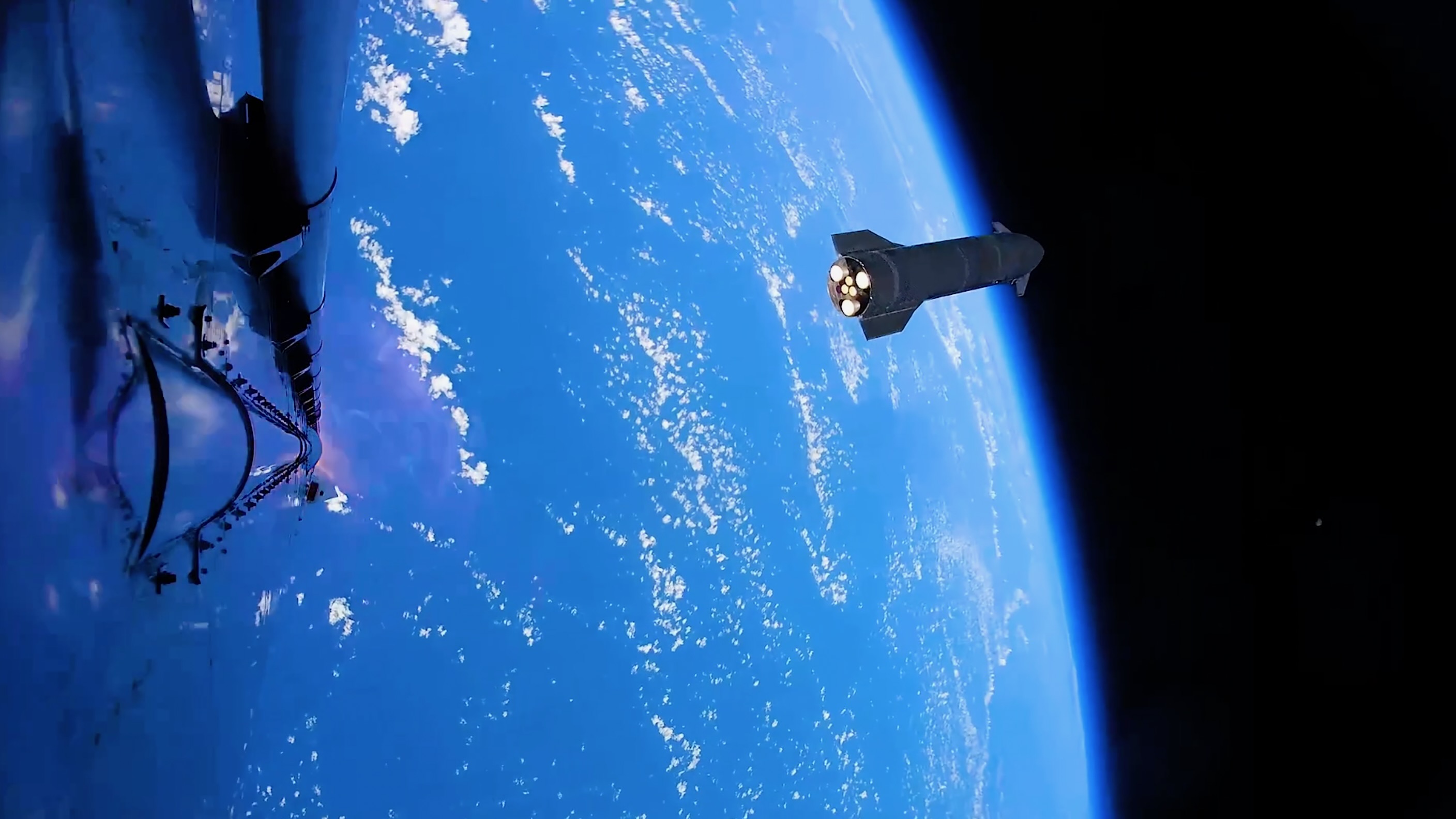
Images shared by Space.com drew particular attention, showcasing moments from the vehicle’s journey through space. Some of the views looked as though they had come straight from a science-fiction film. It is another reminder that Starship is more than a technical project—it has become a symbol shaping humanity’s vision of the future in space.
Starship conducted its first test flight in April 2023. Since then, every mission has exposed weaknesses, provided valuable lessons, and opened the door to further improvements. Flight 13 stands out for a different reason: it was the second launch of Version 3, the Starship generation developed with operational service in mind.

So what exactly does Version 3 Starship mean?
SpaceX has made numerous design changes to Starship over the years. The company’s approach differs from traditional aerospace programs. Rather than spending years developing hardware behind closed doors, it prefers to learn through real-world flight testing.
As a result, each new version is more than a collection of minor updates. Some iterations include significant changes spanning fuel systems, thermal protection technology, and even the overall mission architecture.
According to information reported by Space.com, Version 3 is considered the first generation of Starship designed with operational missions in mind. In other words, SpaceX is no longer focused solely on experimentation—it is working to transform Starship into a space transportation system capable of regular service.
If that goal is achieved, Starship’s role will extend far beyond launching satellites. It could support everything from lunar missions to future journeys to Mars.
Why is NASA placing so much importance on Starship?
Starship’s future matters not only to SpaceX. NASA is also watching the vehicle’s progress closely.
Under current plans, Starship is expected to play critical roles in the Artemis program. At the heart of NASA’s effort to return humans to the Moon, Artemis aims to place astronauts on the lunar surface once again.
According to publicly available plans, Starship is expected to support Earth-orbit operations related to Artemis III, currently targeted for next summer. It is then expected to help transport astronauts near the Moon’s south pole during the Artemis IV mission, planned for late 2028.
The Moon’s south pole has long fascinated scientists. One of the main reasons is the possibility that permanently shadowed craters contain water ice. That resource could provide a major advantage for future permanent lunar bases.
NASA’s preparations across multiple projects are part of that broader vision. In our previous article, NASA announces new small spacecraft mission to the Moon, we discussed how activity around the Moon continues to accelerate.
Key data from Flight 13
While publicly released numerical details about the mission remain limited, I’ve gathered the main facts from available reports in the table below.
| Parameter | Value |
|---|---|
| First Starship test flight | April 2023 |
| Mission reviewed | Flight 13 |
| Starship version | Version 3 |
| Version 3 launch count | 2 |
| Artemis III timeline | Next summer |
| Artemis IV timeline | Late 2028 |
Even the figures in the table illustrate how quickly the program is advancing. The fact that Starship is already being linked to lunar missions only a few years after its first test flight is remarkable.

Why did these images attract so much attention?
Modern space missions are no longer confined to technical reports. Thanks to onboard cameras, millions of people can watch rocket flights unfold in real time.
The imagery captured during Flight 13 stood out for exactly that reason. The curvature of Earth, the darkness of space, and the vehicle’s structural details combined to create memorable scenes.
These visuals are also important for public engagement. Space programs often require substantial budgets, and allowing people to see the results firsthand helps strengthen the connection between scientific work and society.
A similar pattern has emerged across other SpaceX programs. For example, developments surrounding the smoothest ocean landing after Starship Flight 13 reignited discussions about reusable spacecraft technology.
What is the biggest challenge facing SpaceX?
Sending a rocket into space is difficult enough. Making that rocket reliable, routine, and economically viable is far more complex.
Starship’s primary objective is no longer achieving isolated successes. The system must be capable of flying repeatedly, preparing quickly between missions, and meeting the safety standards required for human spaceflight.
NASA’s interest in the vehicle raises expectations even further. Once a system is intended to carry people, the standards become much more demanding.
At the same time, SpaceX’s track record over the past several years shows that the company is willing to pursue ambitious goals. Projects ranging from Falcon rockets to the Crew Dragon capsule were initially viewed as risky but eventually matured into routine operational systems.
Meanwhile, NASA continues working with multiple launch systems for future missions. One example is the news that NASA selected Falcon Heavy for the SunRISE mission, highlighting the agency’s ongoing collaboration with SpaceX across several areas.

How could Starship’s success affect human spaceflight?
Looking back through spaceflight history, certain vehicles fundamentally changed the game. Saturn V, the Space Shuttle, and Falcon 9 are among the most influential examples.
Starship has the potential to join that list. The project is not simply about building a larger rocket. It is also aimed at lowering the cost of access to space and enabling a much higher flight cadence.
If the system performs as planned, activity around the Moon could increase dramatically while preparations for Mars accelerate. That would help make space exploration part of a broader ecosystem rather than the domain of government agencies alone.
One recent example highlighting the importance of human spaceflight was NASA astronaut Chris Williams’ return to Earth. Every successful mission builds experience for even more ambitious flights in the future.
What can we expect next?
SpaceX’s primary goal is to make Starship fully operational as quickly as possible. Flight 13 does not mean that objective has already been achieved, but it does suggest that a significant portion of the journey is now behind the company.
Upcoming tests will closely evaluate reusability performance, mission safety, and long-duration operational capabilities. As NASA-related missions draw closer, each new flight is likely to attract even greater attention.
The footage we watched today may come from a test mission. Yet within a few years, similar images could include astronauts traveling toward the Moon. That possibility is exactly what makes the Starship story so compelling.
Frequently Asked Questions
Why is Starship Flight 13 important?
Because it was the second launch of Version 3 Starship, the first generation designed for operational use, demonstrating the program’s growing maturity.
Which NASA missions will use Starship?
Under current plans, the vehicle is expected to play major roles in both Artemis III and Artemis IV.
When was Starship’s first test flight?
The first Starship test flight took place in April 2023.
Sources
Editor’s Perspective: The reason I follow every Starship test flight so closely is not just the rocket’s sheer size. This program represents a bridge between humanity’s return to the Moon and its dream of reaching Mars. The few minutes of footage we watch today could be the opening scenes of a future era when people travel routinely to other worlds.
Bir Yorum Yazın