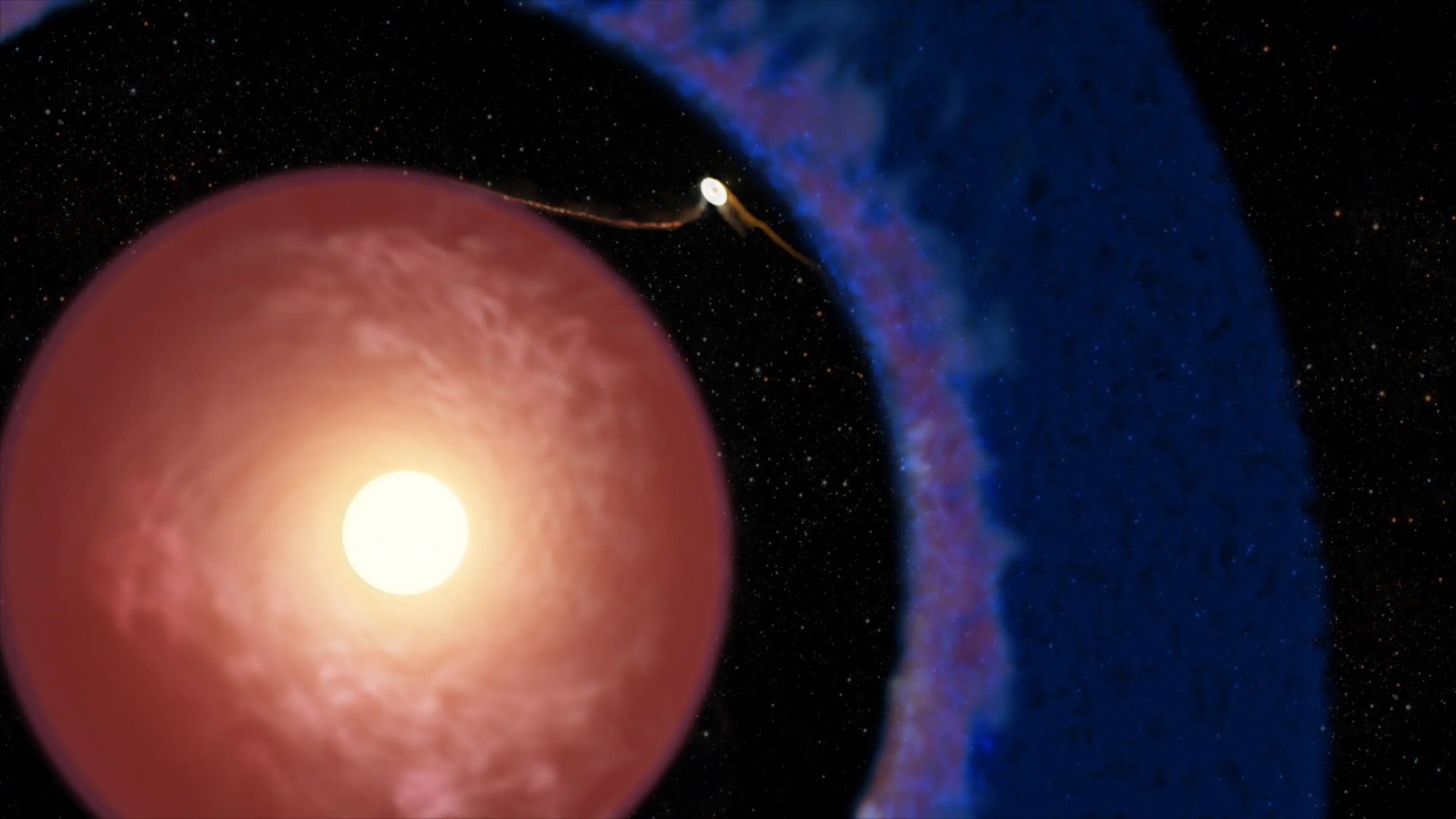
Quick Summary: Astronomers have confirmed the youngest known planet: Elias 2-24 b. Still in its infancy, this giant planet is just beginning to take shape from the disk of dust and gas surrounding its star. This discovery offers a unique opportunity to test current theories of how planets form.
How Are Planets Born? Why Are Baby Planets So Important?
To understand how planets form, astronomers rely on computer simulations and observations of dusty disks around young stars. Yet directly spotting newborn planets within these disks is incredibly challenging. That’s where discoveries like Elias 2-24 b come in. Such baby planets serve as natural laboratories for testing the accuracy of our theories.
Our galaxy is constantly producing new stars and planets, so there should be countless examples at every stage of evolution. However, most current telescopes cannot see these infant worlds. Although researchers have a theoretical understanding of the process, they face a major observational gap.

Why Does This Discovery Solve a 10-Year Mystery?
Confirming Elias 2-24 b also answers a question astronomers have debated for nearly a decade. Earlier observations hinted at a possible planet in this system, but definitive proof was elusive. The high sensitivity of next-generation telescopes has now removed all doubt, confirming the planet’s existence beyond question.
This confirmation does more than prove a planet’s existence; it demonstrates how far our ability to observe the earliest stages of planetary formation has come. Previously, such baby planets were hidden from view by the dense dust and gas surrounding them.
| Parameter | Value |
|---|---|
| Planet Name | Elias 2-24 b |
| Discovery Status | Confirmed |
| Age | Baby planet (youngest known) |
| Star | Elias 2-24 |
| Significance | Opportunity to test planetary formation models |
What Will Next-Generation Telescopes Bring?
This discovery is also a promising sign for future observations. The added sensitivity of NASA’s upcoming Nancy Grace Roman Space Telescope, in particular, will allow astronomers to find more baby planets in the earliest stages of formation. This could close one of the biggest observational gaps in exoplanet science.
Luis Cieza expressed his excitement:
“This is just the beginning of a new era of discovery. It’s incredible that with modern technology we can now watch planet formation in action. Roman will take planet hunting to the next level.”
For now, astronomers are using observations of such baby planets to answer fundamental questions about how planets form. As we discussed in our article [Record Broken for Youngest Planet: Elias 2-24 b, the Universe’s Newest Baby](https://galaktikuzay.com/genc-gezegen-rekoru-kirildi-elias-2-24-b-evrenin-en-yeni-bebegi), discoveries like this could force us to rewrite the timeline of planet formation.

How Will This Discovery Affect Planetary Formation Models?
Current models of planet formation rely heavily on theory and simulations. Real observations like those of Elias 2-24 b show where these models work correctly and where they fall short. This provides new data on key issues such as the rate at which young planets gain mass, their migration within the disk, and their orbital dynamics.
Alongside other advances in space exploration, such as [SpaceX Launches 3 Satellites on Its 700th Falcon Mission](https://galaktikuzay.com/spacex-700-falcon-gorevinde-3-uyduyu-yorungeye-tasidi), discoveries like this highlight how rapidly space science is progressing. Every new observation refreshes our understanding of how the universe works.
Why Do Observational Gaps Matter?
Astronomers can observe star and planet formation in every corner of the universe. However, the most critical phase—the “baby planet” period—often escapes detection. This leaves significant gaps in our knowledge of the earliest stages of planet formation. Elias 2-24 b is an important step toward filling that void.

What Does the Future Hold?
With the Nancy Grace Roman Space Telescope coming online, we expect a significant increase in the number of baby planets discovered. This will help us understand the details of planet formation. Perhaps soon, alongside developments like [Will SpaceX Starship Reach Orbit on Its 14th Flight? Date Announced](https://galaktikuzay.com/spacex-starship-14-ucusunda-yorungeye-ulasacak-mi-tarih-belli-oldu), the vehicles carrying these telescopes into space will launch more frequently.
In conclusion, the confirmation of Elias 2-24 b marks a turning point in exoplanet science. This discovery doesn’t just add a new planet to the catalog; it opens a unique window into one of the universe’s most fundamental processes. In the coming years, as the number of such baby planets grows, we may need to rewrite the textbooks on planet formation.
From the Editor’s Desk: This discovery genuinely excites me. Just think—billions of years ago, our own Solar System began as a baby planet like this. Being able to watch that process unfold in real time is an incredible opportunity to understand our place in the universe. And once the Roman Space Telescope comes online, the next decade will be a golden age for planetary science. I hope these discoveries also inspire young people to pursue science and space exploration.
Frequently Asked Questions
Why is Elias 2-24 b so important?
Elias 2-24 b is significant because it is the youngest planet confirmed to date. This gives us a direct look at the earliest stages of planetary formation.
Which telescope discovered this planet?
The discovery was made possible by next-generation telescopes capable of highly sensitive observations. The Nancy Grace Roman Space Telescope is expected to make even more discoveries in this area in the future.
How will this discovery affect planetary formation models?
Observations like this allow us to test existing theoretical models. With this data, scientists can refine their models even further.
Bir Yorum Yazın